
The world has become an increasingly ugly place. On social media, in the news, on television, in movies, in politics, in our culture, and even within our churches, true beauty feels more and more rare. Beauty cannot be defined by our personal beliefs, politics, opinions, or backgrounds. Beauty is defined by how we love—by creating spaces of love where all who enter are blessed. Jesus was beautiful. Scripture tells us His physical appearance held no special beauty, and yet the way He loved, the world of love He created around Himself, made Him beautiful.
Jesus created beautiful spaces—beautiful worlds. When we think of Christ, we often focus only on the pain of the cross, and we forget the beauty of the life He lived. The stories of Scripture fill my imagination with scenes of Jesus gathering all kinds of people in community and fellowship. I see them sitting on the beach, sharing a meal of fish and conversation. I see them in pastoral fields surrounded by nature, listening to stories and discussing their meaning. They are in homes, breaking bread together. They are sailing across the sea as the sound of the waves serenades. They are at a wedding, dancing and drinking the finest wine. Jesus created inclusive fellowship in beautiful spaces and cultivated beautiful community. He formed beautiful worlds with anyone willing to join Him—you could be a Pharisee, a beggar, a leper, a woman possessed by demons, a tax collector, a harlot, a man, a woman, a child, African, Greek, Jewish, a loyal follower, a curious onlooker, or even a betrayer. No matter who you were, you were welcomed into the beautiful world of Jesus.
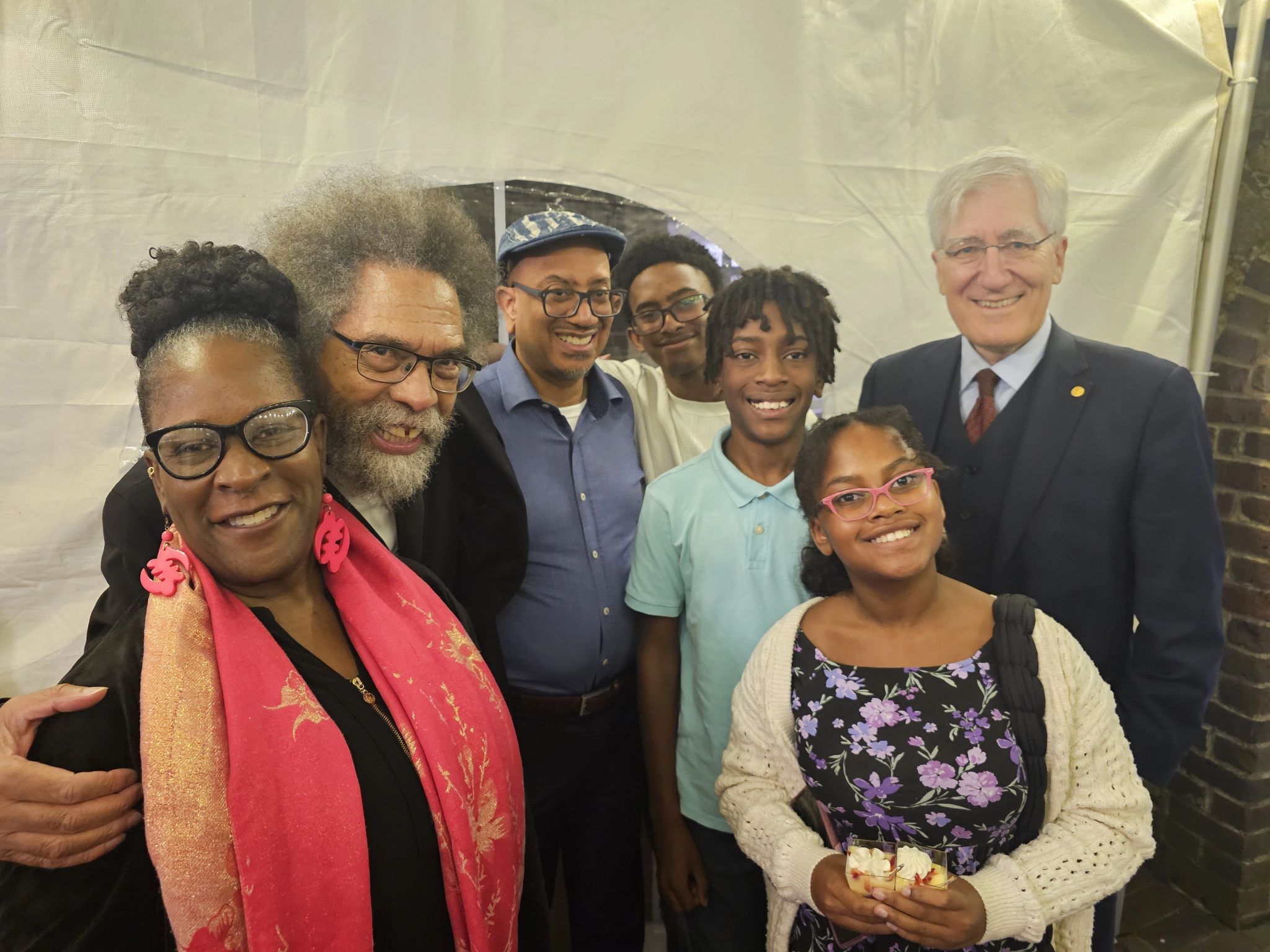
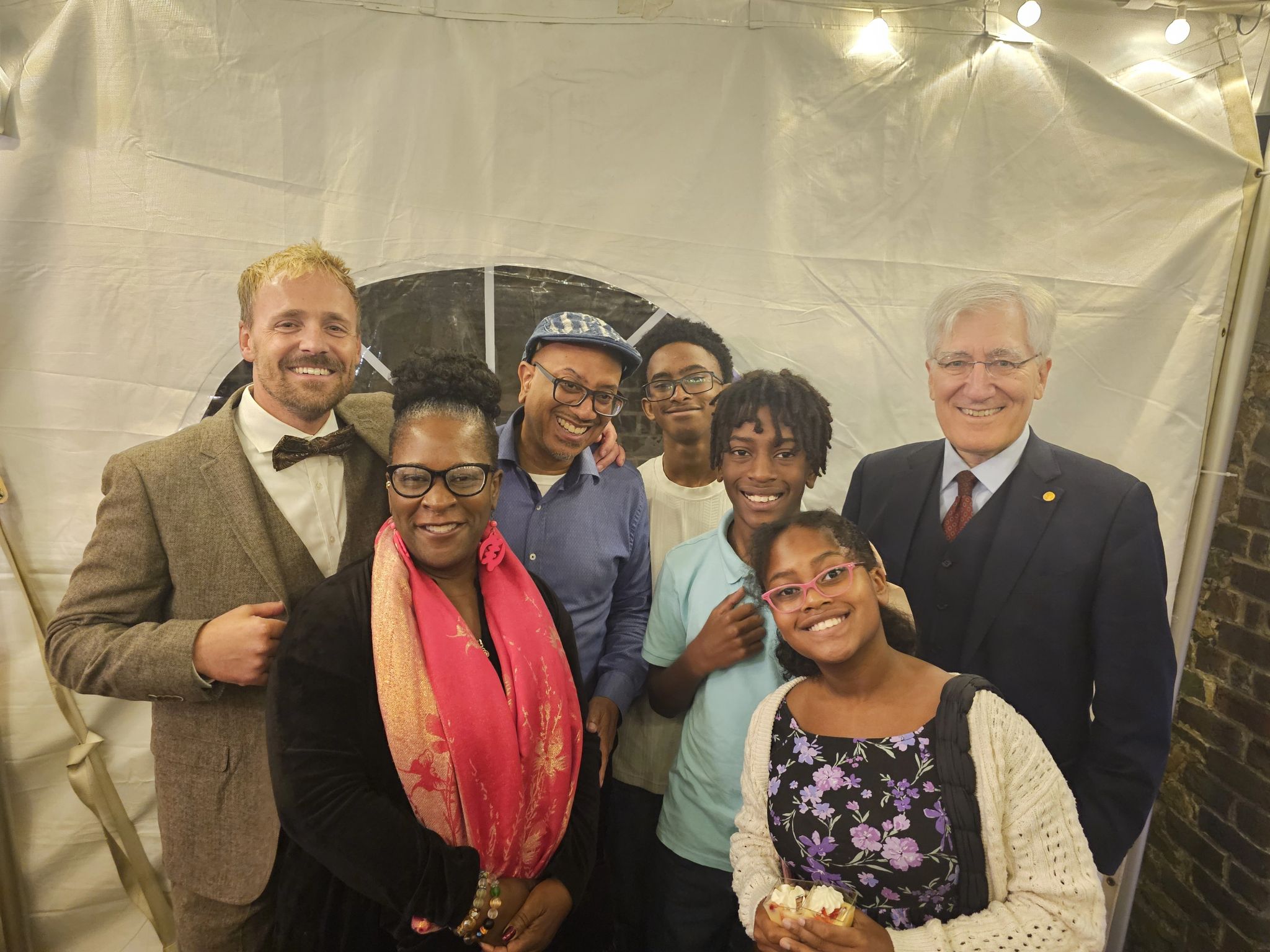
I yearn to create beautiful worlds like Jesus. I long to dwell in the beautiful worlds created by others. It doesn’t matter to me if someone worships like I do, votes like I do, or lives like I do. In this world scarred by division and labels, I am drawn to people who strive to make peaceful, loving communities—beautiful worlds. I experienced that beauty recently at the 10th anniversary celebration of the CLT. We gathered in a garden filled with twinkling lights, music, laughter, delicious food, community, and love. None of us were the same. Outside this space, we voted differently, believed differently, lived differently. But inside this beautiful world—love bound us together.

I arrived late, but as my family and I walked in, we were met with smiles, hugs, and warmth. Cornel West and Robbie George greeted my children and husband with genuine affection. They paused their conversations, stood up, and gave their full attention—even to my kids. That is what a beautiful world looks like. Their friendship—enduring despite the fracture and polarization of our society—is a witness to what is possible when we choose to create beauty in the midst of brokenness. We took photos, we ate, we talked, and we celebrated community—drawn together by Jeremy Tate, who at his core fights not to dominate the conversation, but to make space for others to be heard in a world where partisanship, racism, and elitism often silence so many.
A few weeks ago, Education Week interviewed me about the CLT. They asked how the CLT could claim to be inclusive while still navigating the political landscape required to move it forward. Some of my response was not included in the article—so I will share it here:
Nothing about the CLT Exam is political or racial. At its heart, we simply want every student in America to have the opportunity to take it and have it count toward their academic progress. Years ago, during a CLT advisory meeting, we started asking how this exam could be used nationwide—just like the College Board and other standardized assessments. We realized that the only way forward was through legislation.
At the time, President Biden was in office, and culturally there was very little openness to anything connected to the classical tradition. As someone who voted for Biden and has never been a Republican, this was deeply frustrating for me. It has been incredibly difficult—almost impossible—to help many Democrats see the value of classical education. Too often it is misunderstood, viewed with suspicion, or dismissed entirely in educational policy conversations, but looking at history we all need to take a second look at it.

The process of using legislation to gain wider acceptance for the CLT Exam is the same path every standardized test has had to take. It is unfortunate that this process has become partisan. You would think that, for the sake of our children, both sides could focus on what truly serves students best. But because assessments are recognized through legislation, they inevitably become entangled in political battles. For me, I have had to make the decision to prioritize children over politics (this is one of several reasons why I am also now an independent). The CLT has had to make similar choices to navigate this landscape.
I love this test because, like the beautiful world that has grown around it, it welcomes all people. Its texts come from a wide range of authors and traditions. Its standards do not shift to fit cultural trends or political pressure. Any student—from any background—can prepare for it, take it, and receive an honest assessment of their academic strengths and weaknesses. Beautiful worlds do not reshape themselves to satisfy one group—they simply are. They stand like a cornerstone, steady and trustworthy, inviting all who enter to rest with confidence.
Each year, the CLT brings us together in fellowship to remember what truly matters—civil discourse, civic engagement, shared humanity, and loving our neighbors as ourselves. I have never hidden who I am or what I believe about politics, race, faith, or anything else in order to belong to the CLT community. In advisory meetings I have sat in a planning group with a Jew, a Muslim and a Christian. When I walk into this beautiful world the CLT has created, I see the smiles, I feel the hugs, and I know they understand exactly where I stand. Yet in this space, it is all love. That love keeps me close, even though I no longer serve on the advisory board. I have paused speaking, consulting, advisory positions—everything—because this has been a demanding season. The work of building beautiful worlds can make a person weary. I am raising three teenagers, own a school, and settling into my role at Catholic University. It has been hard. But attending the CLT’s 10-year anniversary celebration brought joy back to my heart. It reminded me of what is most important: friends, good books, civil discourse, love, and belonging. These are the foundations of a beautiful world—a world that stands in defiance of the ugliness of division.
To simply dismiss the CLT because of how it is currently working with political leadership is to completely misunderstand what this company is truly about. Let’s be honest—most standardized tests have long ignored the cultural context of marginalized communities and people of color. This issue existed long before the CLT ever began. The CLT, however, is rooted in a tradition that has shaped all of humanity since ancient times—a tradition that formed civilizations across continents. It draws from an enduring heritage that my ancestors, too, accessed. Through it, they gained the literacy, wisdom, and understanding necessary to persevere in a world that often denied them opportunity.
The CLT is now moving through the necessary process to be formally accepted within our educational system so that all students may have access to it. And because the CLT remains steady in its standards and educational philosophy, all students—regardless of background—have a fair chance at success.
My ancestors were drawn to the classical tradition because in a world full of uncertainty, it was the only constant. Wherever they went, the knowledge remained the same. W.E.B. Du Bois captured this beautifully when he wrote, “The riddle of existence is the college curriculum that was laid before the Pharaohs, that was taught in the groves of Plato, that formed the trivium and quadrivium, and is today laid before the freemen’s sons of Atlanta University…. They were right when they sought to found a new educational system upon the University; where, forsooth, shall we ground knowledge save on the broadest and deepest knowledge.”
This same stability in the tradition is what I witness in my own work. It is why I use it exclusively in my school. After ten years in my parents’ school and ten years in the school I founded, the results are the same: when students work through the full curriculum with dedication—and when parents support that journey—it leads to purpose, direction, and flourishing for so many of our graduates.
Yes, the CLT may offer test prep guides, but the best preparation for it is not a cram course; it is a high-quality education grounded in a philosophy that has stood the test of time since nearly the beginning of time. When students enter my school from local public systems, they often struggle academically, even when their report cards suggest otherwise. We use the CLT as a diagnostic tool, as a final exam for high schoolers, and as an exit exam for seniors. Without ever offering formal “test prep,” we have seen students’ scores rise each year they remain with us.
Here’s a bit of a case study (we do not have grade levels in the school):
Some years ago, we recognized that one of our students was performing at a high academic level at just 14 years old—but we found ourselves asking an honest question: was she naturally gifted, or was this simply the fruit of being classically educated since elementary school? We have noticed over time that the longer a student is immersed in a classical education, the more curious they become. They ask deeper questions. They want to know more. They become hungry for learning. So we didn’t know whether to call her “gifted,” or whether this was the natural outcome of being formed by this kind of education.
To better understand where she was academically—not for college admissions, not for pressure—we allowed her to take the CLT. She scored a 53. That score did not discourage us. It gave us an honest and clear picture of both her strengths and the areas where she still needed support. Rather than turning to test prep, we strengthened our program. We made thoughtful adjustments—beginning geometry earlier, refining curriculum, reassigning teachers where needed, and enrolling students in dual-enrollment community college math courses to build higher-level math skills.
At 15, she took the CLT again and scored a 63—a ten-point increase. This score was higher than most of our seniors who had only been with our school for a year or two. She was still young and had not completed all of her high school math. At the time the national CLT average was about a 75, so while her score was slightly below that, it was an accurate reflection of her true academic level and her progress.
As the years went on, we allowed her to dual-enroll at the local community college to take college level math classes. This allowed her to go beyond the traditional high school sequence, especially in math—an area we had been intentionally working to strengthen since her first CLT score.
As a senior, she chose to take the SAT because the college she wanted to attend did not accept the CLT (which, in my opinion, is a disservice to students—every college should accept it). With no SAT course, no tutoring, and no test prep—only the fruit of years of classical education and listening to how the CLT was guiding us—she scored nearly a 1200. She plans to take it again since that was her first time ever taking it.
This journey is a clear example of why I prefer the CLT. Because its standard does not change, it offers a truthful and consistent measure of student growth over time. It didn’t push us to teach to the test—it pushed us to teach better. The results guided real educational decisions: refining curriculum, adjusting instruction, and creating meaningful academic opportunities like dual-enrollment.
What makes the CLT even more valuable is that it is philosophically partnered with our school. Because the test is grounded in the same vision of education that shapes our curriculum, I don’t have to spend money on outside test prep materials. I simply teach what we believe to be good, beautiful, and true, and the CLT measures student comprehension and intellectual growth within that framework. In this way, the test is not working against us—it is working with us. It becomes a partner in formation, allowing us to assess not only how well students are learning, but also how well we are teaching.
Our students often say they enjoy taking the CLT more, even though it feels more challenging—and I believe that is a good thing. Testing should not be about buying more prep materials; it should honestly measure the quality of the education a student is receiving. When students join us later in their academic journey, their CLT scores often start low—but year after year, we see growth. Because the CLT remains stable, we can tell—truthfully—whether we are serving our students well. When scores struggle, we adjust. When they rise, we know our work is bearing fruit. The CLT has felt less like an exam and more like a partner in our work. That is how assessment should function. It doesn’t pressure students to perform for a number; it invites them into a way of thinking and living. It creates a beautiful world around them—a world where learning is meaningful, where ideas matter, and where students are formed, not just tested.
Classical education truly strengthens the mind and intellect. My experience as an educator has shown me this, especially in the case of the student I just described. And when I look beyond my classroom to the lives of so many who came before—Harlem Renaissance writers, Martin Luther King Jr., Frederick Douglass, W.E.B. Du Bois, Malcolm X, Phillis Wheatley, Angela Davis, Fred Hampton, Huey P. Newton, Anna Julia Cooper, Chinua Achebe, Gandhi, Khalil Gibran, and countless others—I see the same pattern emerge: an awakening. A kind of enlightenment that this tradition has always offered—unchanging, always present, waiting for those who seek it.
Unlike other tests that shift with cultural winds or political agendas, the CLT stands firm. It does not bend to the noise of the moment but calls us back to timeless pursuits—truth, virtue, wisdom, and human dignity. And what makes it classical is not that it assesses logic, Latin, or master of the Western canon. Its classical nature is far more profound:
- Its texts emerge from the classical tradition or are inspired by it. The readings are drawn directly from ancient sources or from works shaped by that tradition’s influence.
- Its standard does not change. Like the classical tradition itself, the CLT keeps its expectations steady—unmoved by politics, trends, or cultural pressure.
- It measures enduring knowledge. There is no “new math” on this exam. It tests the same traditional mathematics that has existed since Euclid.
Its greatest mark of classicalness is that it carries the same stability, depth, and intellectual weight as the tradition that inspired it. So regardless of whom the CLT partners or speaks with in its effort to be competitive alongside other standardized tests—tests that were already problematic long before the CLT existed—I will continue to use it. And this weekend, I realized I am not alone. Many of us felt the same way, even though we may differ widely in our beliefs about so many other things in this world.

As my family and I walked along the cobblestone street toward our car on that beautiful night in Old Town Annapolis, we saw Cornel West and Robbie George strolling side by side—perhaps on their way back to their hotel. One on the left, one on the right. Both men of faith, one progressive and one traditional. They were laughing and talking together, and I thought to myself, this is a symbol of the beautiful world the CLT has created. And my heart smiled.
As my husband and I drove home that night, we both felt deeply blessed. It was a beautiful evening where the forces that seek to divide us were not allowed to enter. Beautiful worlds are not created by uniformity or forced agreement. They are created by people willing to listen, speak, wrestle, grow, and remain in equitable human connection. I felt honored to be there and grateful to have played even a small part in its growth.
 Dr. Anika T. Prather